
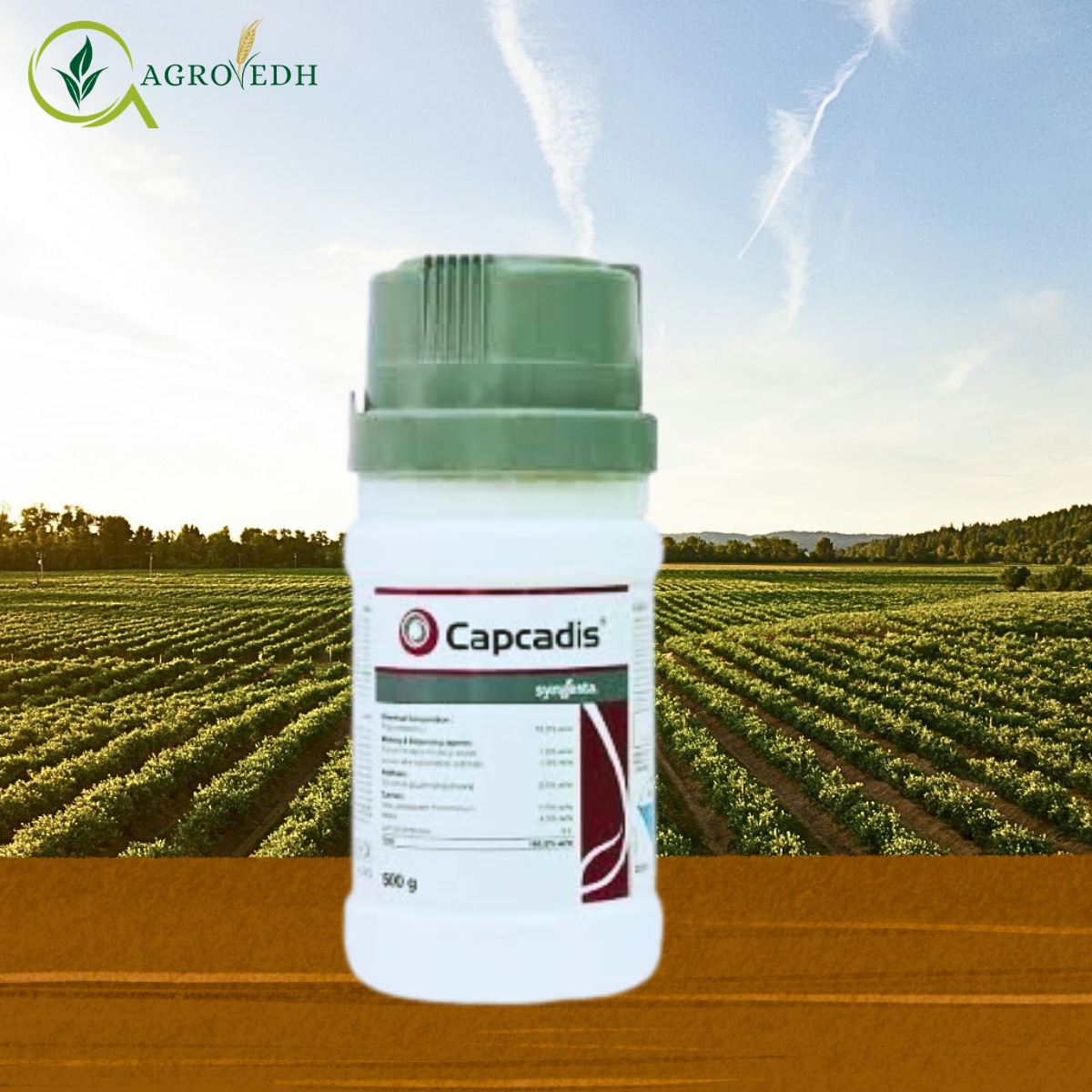
Capcadis Insecticide
Capcadis Insecticide is a highly effective systemic insecticide formulated with Thiamethoxam 75% SG, designed to provide rapid and long-lasting control of major sucking pests. Belonging to the neonicotinoid group, it acts on the insect nervous system causing paralysis and eventual death.
Capcadis is quickly absorbed by plant tissues and translocated throughout the plant, providing protection to new growth and hidden pest populations. It is widely trusted by farmers for crops such as cotton, rice, vegetables, fruits, and pulses where sucking pests like aphids, jassids, thrips and whiteflies cause heavy yield loss.
Capcadis Insecticide Product Overview
| Feature | Details |
|---|---|
| Product Name | Capcadis Insecticide |
| Category | Systemic Insecticide |
| Technical Content | Thiamethoxam 75% SG |
| Chemical Group | Neonicotinoid |
| Formulation | Water Soluble Granules (SG) |
| Mode of Action | Systemic insecticide affecting insect nervous system |
| Toxicity Classification | Blue Label (Moderately Toxic) |
Capcadis Insecticide Features and Benefits
Rapid Knockdown Action
Capcadis quickly affects the nervous system of insects, leading to fast feeding cessation and pest mortality.
Strong Systemic Activity
After spraying, the insecticide moves inside the plant through the vascular system, protecting both treated and new leaves.
Long Residual Control
Provides extended protection against recurring pest infestations, reducing the need for frequent spraying.
Effective on Hidden Pests
Controls insects feeding on the underside of leaves or within plant tissues due to its systemic movement.
Low Dose Requirement
Highly potent formulation requires a small quantity per hectare, making it economical for farmers.
Compatible With IPM Programs
Works well in Integrated Pest Management programs when used as recommended.
Mode of Action
Thiamethoxam belongs to the neonicotinoid class of insecticides and acts as a nicotinic acetylcholine receptor agonist in the insect nervous system.
It disrupts nerve signal transmission, causing:
-
Loss of coordination
-
Paralysis
-
Death of the pest
Because of its systemic movement, insects ingest the toxin while feeding on plant sap.
Usage and Crop Recommendations
| Crop | Target Pests | Dosage/ha (gm) | Dilution in Water (L/Ha) | Waiting Period (Days) |
|---|---|---|---|---|
| Cotton | Aphids, Jassids, Whiteflies | 100 gm | 500 L | 21 |
| Rice | Brown Plant Hopper, Green Leaf Hopper | 100 gm | 500 L | 21 |
| Chilli | Thrips, Aphids | 100 gm | 500 L | 7 |
| Okra | Aphids, Jassids | 100 gm | 500 L | 7 |
| Tomato | Whiteflies, Aphids | 100 gm | 500 L | 7 |
| Mango | Hopper | 100 gm | 500 – 1000 L | 14 |
Application Guidelines
Method of Application
Foliar spray using a knapsack sprayer or power sprayer.
Best Time to Spray
Apply at the early stage of pest infestation for best results.
Rain Fastness
Approximately 2–3 hours after application.
Spray Coverage
Ensure uniform coverage on both upper and lower leaf surfaces.
Resistance Management
To prevent pest resistance:
-
Avoid repeated applications of the same insecticide group.
-
Rotate with insecticides having different modes of action.
-
Follow recommended dosage strictly.
Safety and Precautions
-
Wear protective gloves, mask and clothing during spraying.
-
Avoid inhalation and direct skin contact.
-
Do not spray during strong winds.
-
Keep away from children, livestock and water bodies.
Disclaimer
Always read the physical product label provided by the manufacturer before use. Follow safety precautions and recommended dosages during application. AgroVedh is not responsible for any damage resulting from improper use of the product.
Reviews
There are no reviews yet.