
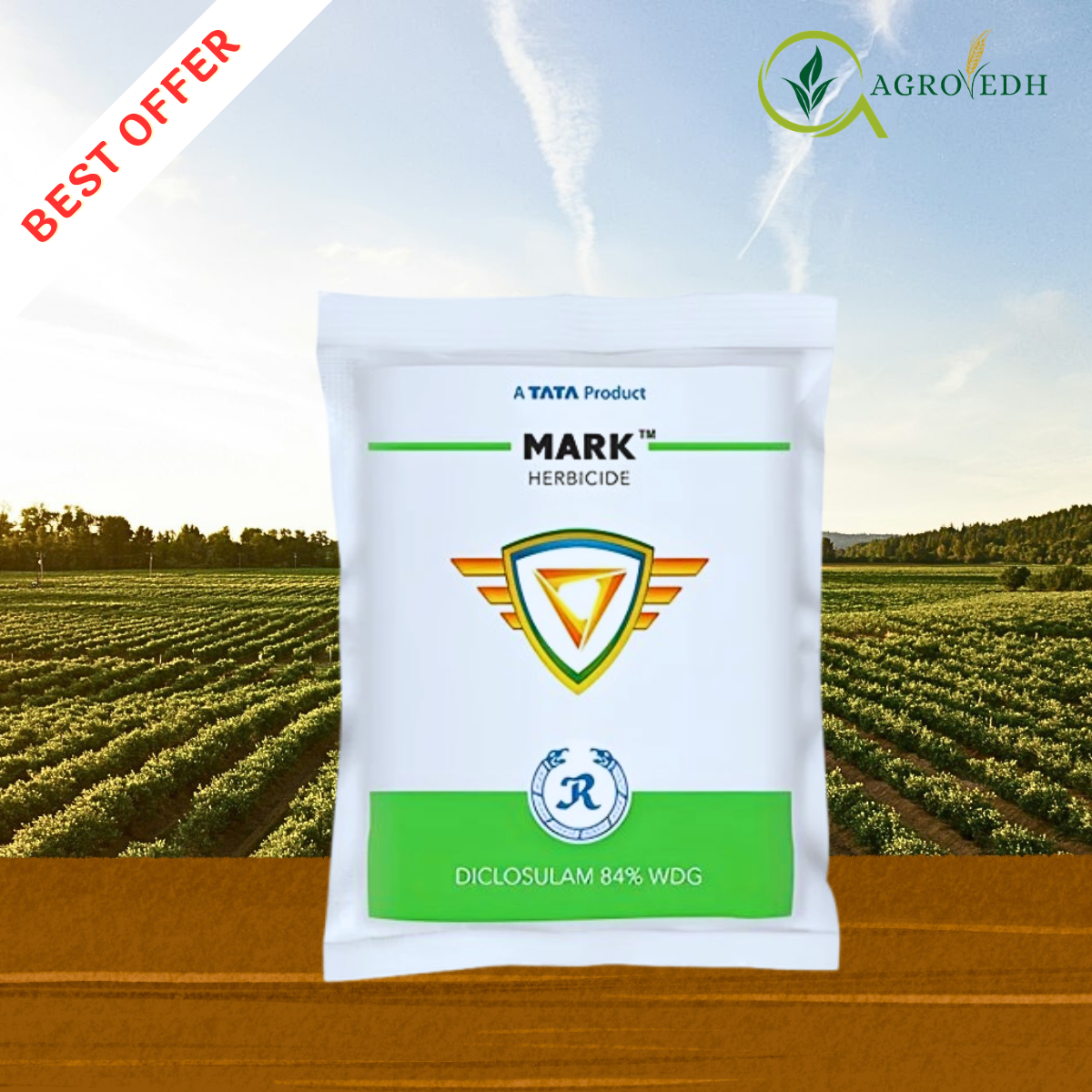
TATA Rallis Mark Herbicide (Diclosulam 84% WDG):
Precision Control of Broadleaf Weeds in Pulses & Soybean
TATA Rallis Mark is a highly effective pre-emergence herbicide powered by Diclosulam 84% WDG, designed for precise control of difficult broadleaf weeds in crops like soybean and pulses. Known for its strong residual activity and selective weed control, it prevents weeds from competing with crops during their most critical early growth stages.
Diclosulam belongs to the Triazolopyrimidine sulfonanilide group, which works by inhibiting the ALS (Acetolactate Synthase) enzyme, stopping weed growth at the cellular level. This targeted action makes it extremely effective against early-germinating weeds while remaining safe for recommended crops when used as directed.
Farmers prefer TATA Rallis Mark for its low dosage requirement, long residual control, and excellent crop safety, helping improve crop establishment and maximize yield potential.
TATA Rallis Mark Herbicide Product Overview
| Feature | Details |
|---|---|
| Product Name | TATA Rallis Mark Herbicide |
| Brand | Rallis India (TATA Group) |
| Category | Selective Pre-Emergence Herbicide |
| Technical Content | Diclosulam 84% WDG (Water Dispersible Granules) |
| Chemical Group | Triazolopyrimidine Sulfonanilide |
| Chemical Toxicity | Blue Label (Moderately Toxic) |
| Mode of Action | ALS Inhibitor – Stops amino acid synthesis in weeds |
TATA Rallis Mark Herbicide Features and Benefits
Strong Pre-Emergence Control
Controls broadleaf weeds at the germination stage, preventing competition with crops during early growth.
Low Dose – High Efficiency
Effective at very low doses, making it economical and easy to apply.
Long Residual Action
Provides extended control of weeds in the field, reducing the need for repeated herbicide applications.
Selective Crop Safety
Specifically designed to be safe for crops like soybean and pulses when used according to recommendations.
Early Crop Establishment
Weed-free conditions during early crop stages allow crops to establish stronger roots and better canopy growth.
Resistance Management Tool
Its unique ALS inhibitor chemistry helps manage weeds resistant to other herbicide groups.
Mode of Action
Diclosulam works by inhibiting the Acetolactate Synthase (ALS) enzyme, which is responsible for the synthesis of essential amino acids (valine, leucine, and isoleucine) in weeds. Once this pathway is blocked, the weeds stop growing and eventually die.
The herbicide is absorbed through roots and shoots of germinating weeds, providing effective early weed suppression.
Usage and Crop Recommendations
| Crop | Target Weeds | Dosage/ha | Dilution in Water | Method of Application |
|---|---|---|---|---|
| Soybean | Broadleaf weeds (Amaranthus, Commelina, Trianthema) | 20 – 26 g | 400 – 500 L | Pre-emergence spray |
| Chickpea | Broadleaf weeds | 20 – 26 g | 400 – 500 L | Pre-emergence spray |
| Pigeon Pea (Tur) | Broadleaf weeds | 20 – 26 g | 400 – 500 L | Pre-emergence spray |
Application Timing
Apply within 0–3 days after sowing (before weed emergence) on a well-prepared moist soil surface.
Rain Fastness
Approximately 2–3 hours after application once the spray has settled on soil.
Best Practices for Maximum Performance
-
Apply on moist soil immediately after sowing for best weed control.
-
Ensure uniform spray coverage across the soil surface.
-
Avoid application on very dry soil as weed germination may reduce herbicide effectiveness.
-
Do not disturb soil after application, as this may reduce herbicide activity.
Safety and Handling
-
Wear protective gloves, mask, and protective clothing during application.
-
Avoid inhalation or direct contact with skin and eyes.
-
Store in a cool and dry place away from food and animal feed.
-
Wash hands and equipment thoroughly after use.
Disclaimer
Always read the physical product label provided by the manufacturer before use. Follow safety precautions and recommended dosage. Agrovedh is not responsible for any damage resulting from improper use.

Reviews
There are no reviews yet.