
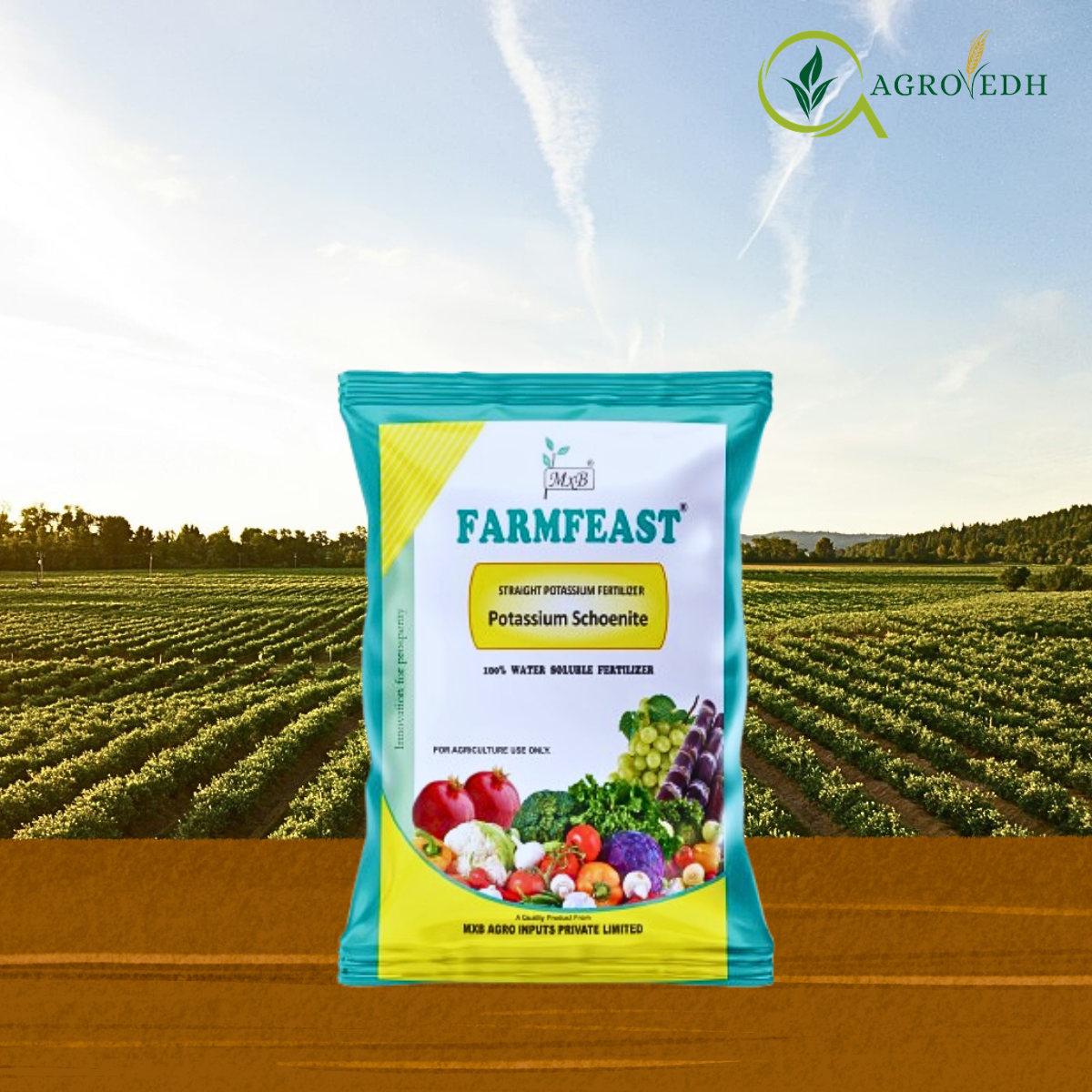
Potassium Schoenite:
High-Efficiency Potassium & Magnesium Fertilizer for Quality Crop Yield
Potassium Schoenite (also known as Sulphate of Potash Magnesia – SOPM) is a premium water-soluble fertilizer that supplies three essential plant nutrients: Potassium (K), Magnesium (Mg), and Sulphur (S). It is widely used in horticulture and field crops where chloride-sensitive crops require high-quality potassium nutrition. Potassium Schoenite improves crop yield, fruit size, color, taste, and shelf life while enhancing plant stress tolerance.
Unlike MOP (Muriate of Potash), Potassium Schoenite is chloride-free, making it ideal for high-value crops such as grapes, fruits, vegetables, and spices. Its balanced nutrient composition supports photosynthesis, enzyme activation, sugar formation, and better nutrient uptake.
Potassium Schoenite Product Overview
| Feature | Details |
|---|---|
| Product Name | Potassium Schoenite |
| Category | Water Soluble Fertilizer |
| Chemical Composition | Potassium Sulphate + Magnesium Sulphate (K₂SO₄·MgSO₄) |
| Common Name | Sulphate of Potash Magnesia (SOPM) |
| Potassium (K₂O) | 22–23% |
| Magnesium (MgO) | 10–11% |
| Sulphur (S) | 22–23% |
| Solubility | Highly Water Soluble |
| Mode of Action | Nutrient Supply & Plant Metabolic Activation |
| Toxicity | Non-Toxic Fertilizer |
Potassium Schoenite Features and Benefits
Chloride-Free Potassium Source
Ideal for chloride-sensitive crops like grapes, potato, tobacco, and vegetables. It prevents chloride toxicity and improves crop quality.
Improves Fruit Size and Taste
Potassium helps in sugar translocation and carbohydrate synthesis, resulting in sweeter fruits, improved color, and better market value.
Enhances Photosynthesis
Magnesium is a core component of chlorophyll and directly supports photosynthesis and plant energy production.
Improves Stress Resistance
Strengthens plants against drought, heat stress, and disease pressure by improving cellular metabolism.
Boosts Crop Yield and Quality
Balanced supply of K, Mg, and S improves flowering, fruit setting, grain filling, and overall productivity.
Improves Nutrient Uptake
Helps plants absorb nitrogen and phosphorus efficiently, resulting in balanced crop growth.
Suitable for Multiple Application Methods
Can be applied through fertigation, drip irrigation, broadcasting, or soil application.
Usage and Crop Recommendations
| Crop | Purpose | Dosage/ha (Kg) | Application Method | Recommended Stage |
|---|---|---|---|---|
| Grapes | Berry development, sweetness improvement | 25 – 50 kg | Fertigation | Fruit development stage |
| Potato | Tuber size and yield improvement | 25 – 40 kg | Soil Application | Vegetative to tuber formation |
| Tomato | Fruit size and color improvement | 25 – 50 kg | Fertigation | Flowering to fruiting |
| Chilli | Yield and fruit quality improvement | 25 – 40 kg | Fertigation | Flowering stage |
| Banana | Fruit filling and bunch weight | 40 – 60 kg | Fertigation / Soil | Fruit development |
| Pomegranate | Fruit size, color and shelf life | 25 – 50 kg | Fertigation | Fruit development stage |
| Cucumber | Flowering and fruit quality | 20 – 40 kg | Fertigation | Vegetative to flowering |
Method of Application
Soil application, drip fertigation, or broadcasting depending on crop and irrigation system.
Compatibility
Compatible with most fertilizers but avoid mixing with calcium-based fertilizers in the same tank.
Best Time of Application
Apply during active crop growth, flowering, and fruit development stages when potassium demand is highest.

Reviews
There are no reviews yet.