
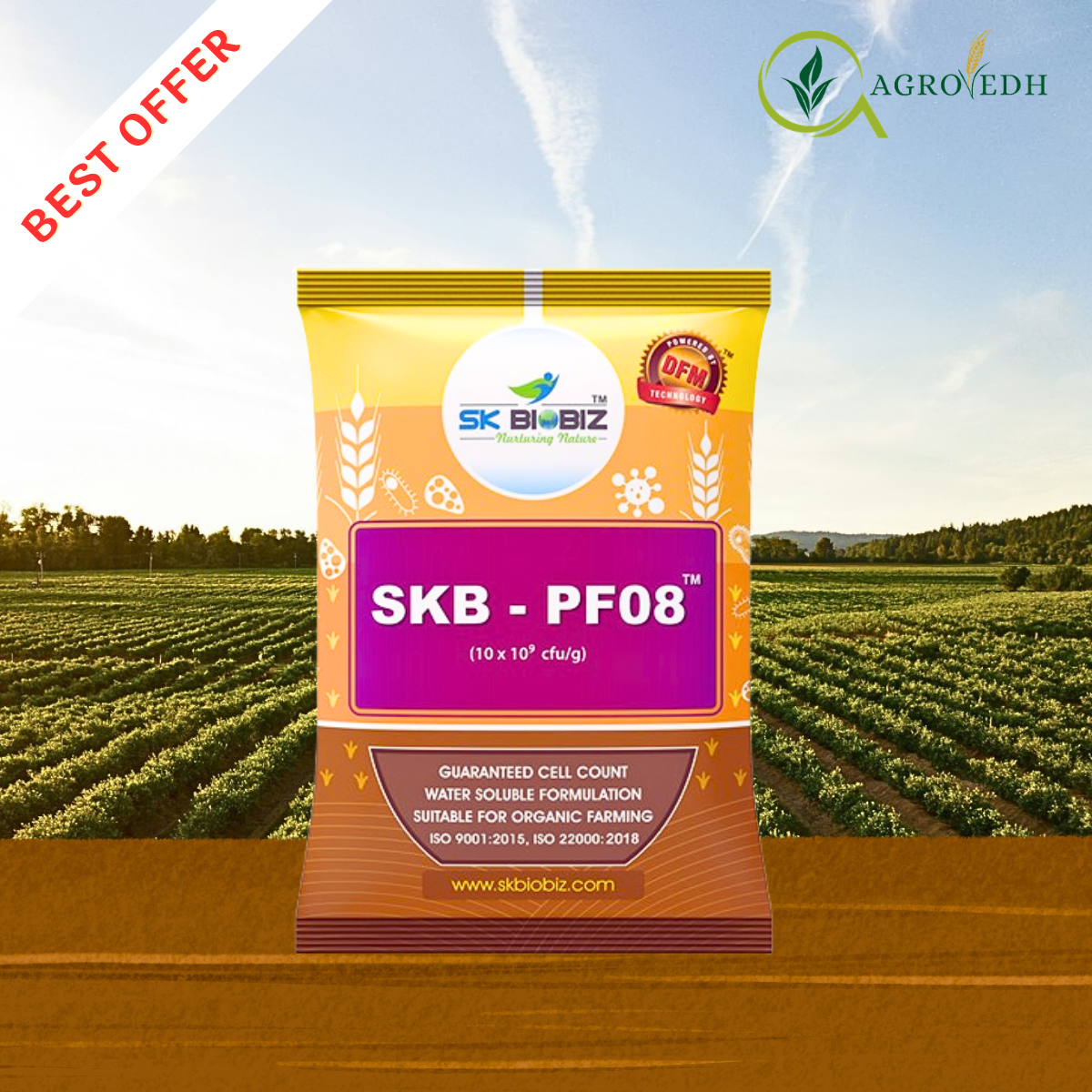
SKB PF08 – Pseudomonas fluorescens Bio-Fungicide for Natural Crop Protection
SKB PF08 is a highly effective biological fungicide based on the beneficial rhizobacteria Pseudomonas fluorescens, widely used in sustainable and organic agriculture. This naturally occurring microorganism colonizes the root zone and leaf surface, creating a protective barrier against several soil-borne and foliar fungal diseases. It works by producing antibiotics, siderophores, and enzymes that suppress harmful pathogens while stimulating plant immunity and growth.
Research from agricultural universities and plant pathology institutes has shown that Pseudomonas fluorescens significantly reduces diseases such as damping-off, root rot, wilt, and leaf spot while improving root development and nutrient uptake. Because of its biological nature, it is safe for beneficial microbes, pollinators, and the environment, making it a key component of Integrated Pest Management (IPM) and organic farming systems.
SKB PF08 Product Overview
| Feature | Details |
|---|---|
| Product Name | SKB PF08 |
| Category | Bio Fungicide / Bio Control Agent |
| Technical Content | Pseudomonas fluorescens |
| Formulation | Bio-Microbial Powder |
| Mode of Action | Biological Antagonism and Plant Growth Promotion |
| Toxicity | Non-toxic / Eco-friendly |
SKB PF08 Features and Benefits
Biological Disease Control
Suppresses many fungal pathogens through natural antibiotic production and competition.
Root Zone Protection
Colonizes the rhizosphere and prevents harmful fungi from infecting plant roots.
Induced Systemic Resistance (ISR)
Activates the plant’s natural defense system to resist future pathogen attacks.
Plant Growth Promotion
Improves root growth, nutrient absorption, and overall crop vigor.
Safe and Eco-Friendly
Suitable for organic farming and does not harm beneficial insects, soil microbes, or the environment.
Resistance Management Tool
Because it works biologically rather than chemically, pathogens are less likely to develop resistance.
Usage and Crop Recommendations
| Crop | Target Diseases | Dosage/ha | Dilution in Water | Method |
|---|---|---|---|---|
| Tomato | Damping Off, Wilt, Root Rot | 2–3 kg | 500 L | Soil Drench / Foliar Spray |
| Chilli | Root Rot, Leaf Spot | 2–3 kg | 500 L | Soil Application |
| Grapes | Downy Mildew, Root Diseases | 2–3 kg | 500–700 L | Foliar Spray |
| Cucumber | Damping Off, Root Rot | 2–3 kg | 500 L | Soil Drench |
| Banana | Panama Wilt, Root Diseases | 3 kg | 500 L | Soil Application |
| Cotton | Root Rot, Seedling Diseases | 2–3 kg | 500 L | Soil Treatment |
| Paddy | Seedling Blight, Root Rot | 2–3 kg | 500 L | Soil Application |
Rain Fastness: Approximately 3–4 hours.
Method of Application:
Can be applied as seed treatment, soil application, root dipping, or foliar spray depending on crop and disease stage.
Best Time to Apply:
Apply during early crop growth stages or before disease appearance for preventive protection.
Research Based Effectiveness
Scientific trials conducted by agricultural research institutions have demonstrated that Pseudomonas fluorescens:
• Reduces damping-off incidence by up to 60–80% in vegetable crops.
• Enhances root biomass and nutrient uptake in crops like tomato, chilli, and cucumber.
• Produces natural antifungal metabolites such as phenazine, pyoluteorin, and hydrogen cyanide, which suppress fungal pathogens.
• Improves plant immunity through Induced Systemic Resistance (ISR) mechanisms.
Reviews
There are no reviews yet.