
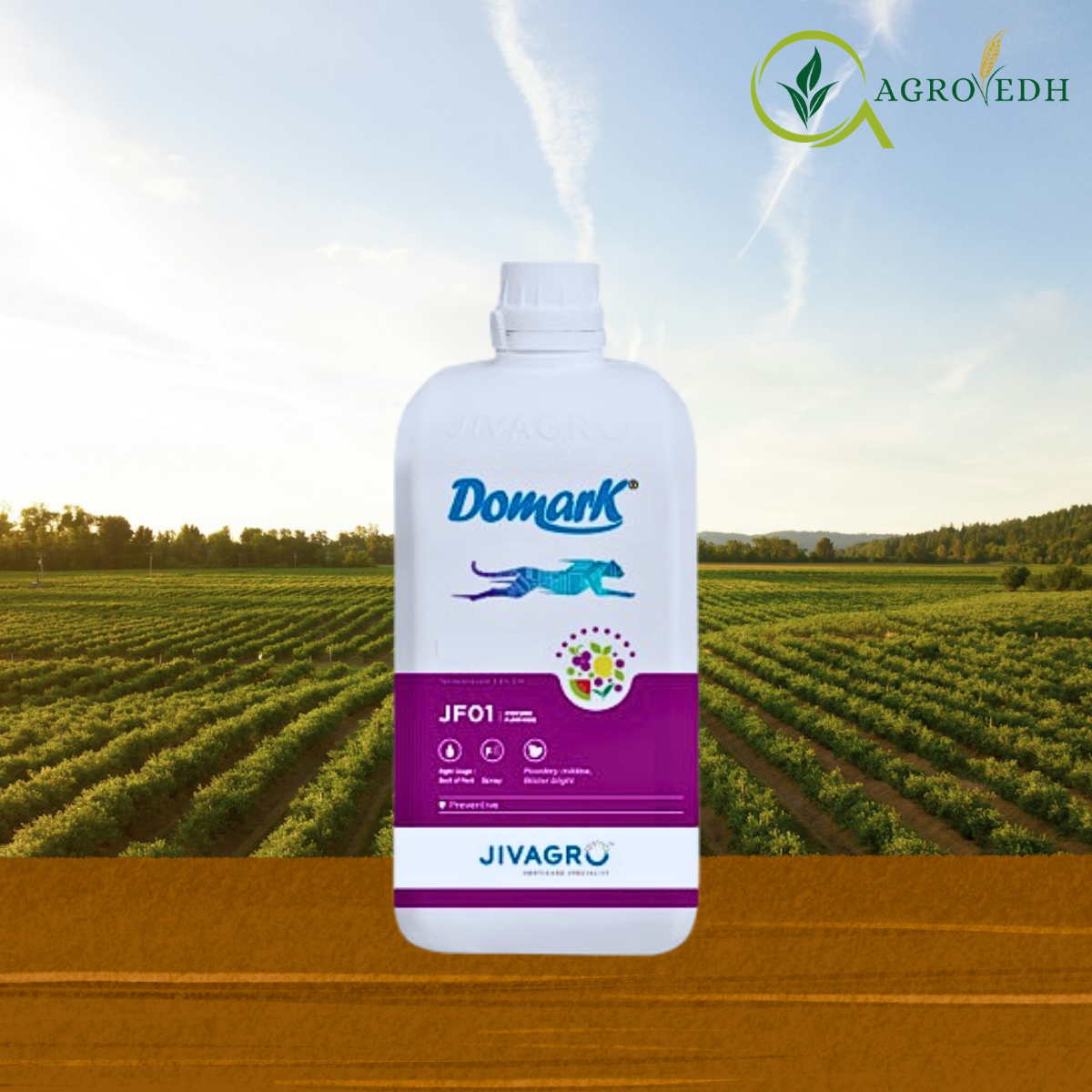
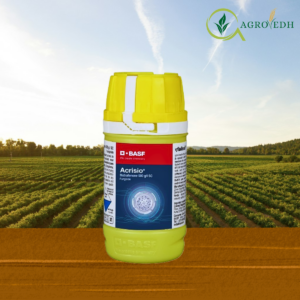
Domark Fungicide
Domark Fungicide is a highly effective systemic triazole fungicide containing Tetraconazole 3.8% EW (Emulsion in Water). It is specially formulated to control Powdery Mildew and other fungal diseases in grapes, chillies, mango, apple, and various horticultural crops.
With strong ergosterol biosynthesis inhibition (EBI) action, Domark penetrates rapidly into plant tissues and provides long-lasting curative and protective control. It is widely trusted by progressive farmers for its quick absorption, rainfastness, and extended residual activity, making it an essential tool in resistance management programs.
Domark Fungicide Product Overview
| Feature | Details |
|---|---|
| Product Name | Domark Fungicide |
| Technical Name | Tetraconazole 3.8% EW (w/w) |
| Category | Systemic Triazole Fungicide |
| Chemical Group | Triazole (DMI Fungicide) |
| Mode of Action | Ergosterol Biosynthesis Inhibitor (FRAC Group 3) |
| Formulation | Emulsion in Water (EW) |
| Toxicity | As per label classification |
| Application Method | Foliar Spray |
Domark Fungicide Features and Benefits
Strong Systemic Action
Rapidly absorbed by leaves and translocated upward, protecting new growth.
Curative and Preventive Control
Stops fungal development at early infection stages and prevents further spread.
Long Residual Protection
Provides extended disease control compared to conventional contact fungicides.
Excellent Powdery Mildew Specialist
Highly effective against powdery mildew across multiple crops.
Rainfast Formulation
Absorbs quickly into plant tissue, reducing wash-off risk after rainfall.
Resistance Management Tool
Belongs to FRAC Group 3; recommended in rotation with multi-site fungicides for sustainable disease control.
Mode of Action
Tetraconazole inhibits C-14 demethylation in fungal sterol biosynthesis, blocking ergosterol formation. Ergosterol is essential for fungal cell membrane stability. When inhibited, fungal growth stops, and infection gradually collapses.
This site-specific action makes Domark highly effective but requires proper rotation with other fungicide groups to prevent resistance development.
Usage and Crop Recommendations
| Crop | Target Diseases | Dosage per Hectare | Dilution in Water | Waiting Period |
|---|---|---|---|---|
| Grapes | Powdery Mildew | 500–600 ml | 500–1000 L | 14 Days |
| Chilli | Powdery Mildew | 500 ml | 500 L | 7 Days |
| Mango | Powdery Mildew | 500–600 ml | 500–1000 L | 14 Days |
| Apple | Powdery Mildew | 500 ml | 500–800 L | 14 Days |
| Cucurbits | Powdery Mildew | 400–500 ml | 500 L | 5–7 Days |
Best Time of Application:
Apply at the first visible symptoms or as a preventive spray during favorable disease conditions (cool and humid climate).
Spray Interval:
10–14 days depending on disease severity.
Rainfastness:
Approximately 2 hours after spray.
Compatibility
Compatible with most commonly used insecticides and fungicides. However, perform a jar test before tank mixing.
Resistance Management Advisory
Since Tetraconazole belongs to DMI (Demethylation Inhibitor) fungicides, avoid repeated continuous sprays. Rotate with multi-site fungicides like Mancozeb or contact fungicides to maintain long-term effectiveness.
Safety and Handling
• Wear protective clothing, gloves, and mask during spraying
• Avoid inhalation and skin contact
• Do not spray during high wind conditions
• Store in a cool, dry place away from children and animals
Disclaimer
This information is for educational purposes only. Always read the physical product label provided by the manufacturer before use. Follow safety precautions and recommended dosages. Agrovedh is not responsible for any loss or damage resulting from improper use.
Reviews
There are no reviews yet.