
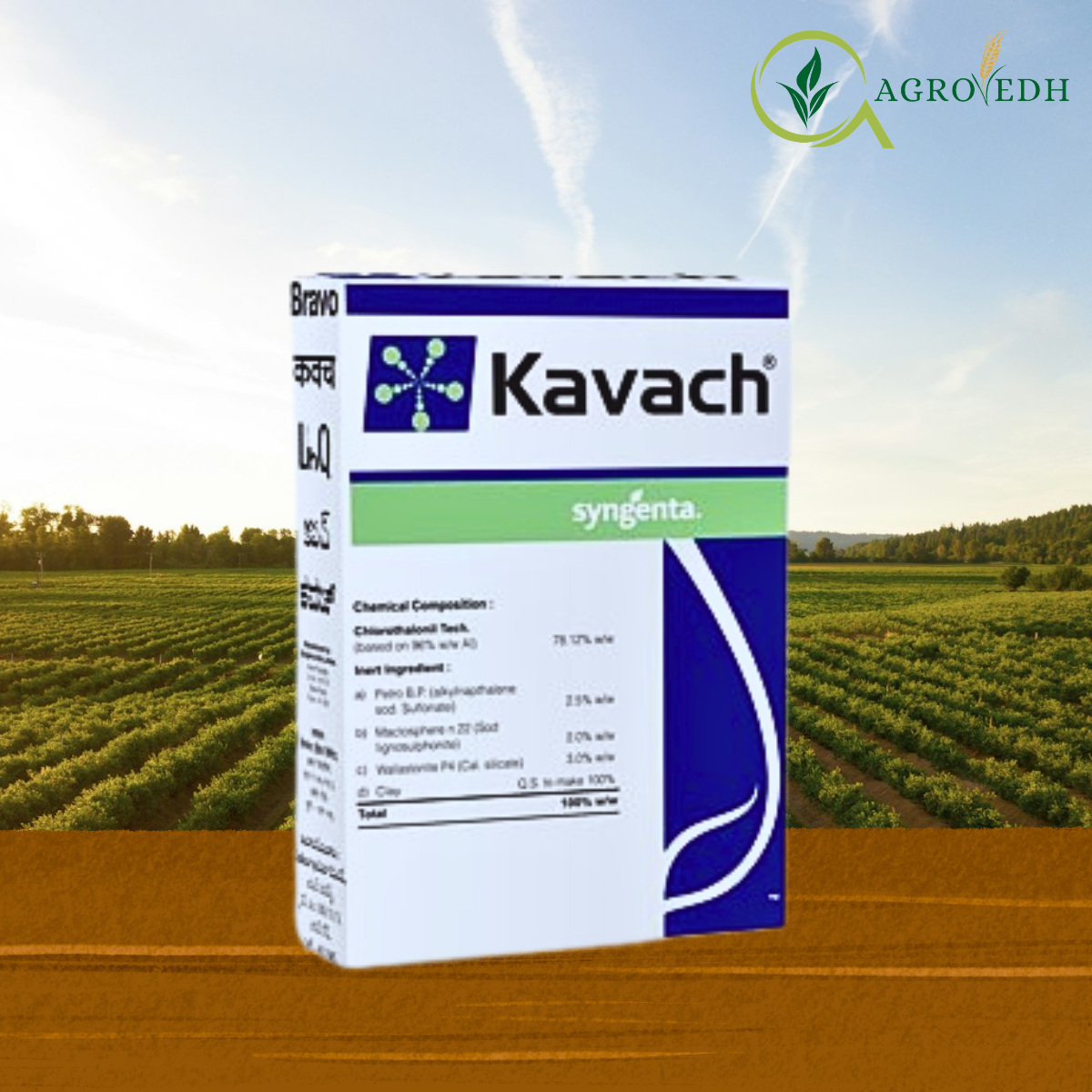
Kavach Fungicide
Kavach Fungicide is a trusted broad-spectrum contact fungicide containing Chlorothalonil 75% WP, designed to protect crops from a wide range of fungal diseases. Known for its strong preventive action and multi-site mode of activity, Kavach forms a protective barrier on plant surfaces that stops fungal spores from germinating and spreading.
Backed by decades of global research on Chlorothalonil, Kavach is widely used in crops like potato, tomato, groundnut, grapes, and vegetables for effective management of blights, leaf spots, mildews, and rust diseases. Its multi-site action significantly reduces the risk of resistance development, making it a reliable partner in Integrated Disease Management (IDM) programs.
Kavach Fungicide Product Overview
| Feature | Details |
|---|---|
| Product Name | Kavach Fungicide |
| Brand | syngenta |
| Category | Contact Fungicide |
| Technical Content | Chlorothalonil 75% WP |
| Formulation | Wettable Powder (WP) |
| Chemical Group | Chloronitrile |
| Mode of Action | Multi-Site Contact Action |
| Toxicity Classification | Blue Label (Moderately Toxic) |
Kavach Fungicide Features and Benefits
Broad-Spectrum Protection: Effective against multiple fungal diseases including early blight, late blight, leaf spot, rust, anthracnose, and downy mildew.
Multi-Site Mode of Action: Attacks fungal cells at multiple metabolic sites, reducing resistance risk.
Preventive Shield: Forms a strong protective film on leaf surfaces that prevents fungal spore germination.
Long Residual Activity: Provides extended crop protection under normal weather conditions.
Excellent Compatibility: Can be tank-mixed with several systemic fungicides for enhanced disease management programs.
Ideal for Resistance Management: Recommended in rotation programs due to its non-systemic, multi-site action.
Mode of Action
Kavach works as a contact fungicide. After spraying, it remains on the leaf surface and inhibits fungal respiration and enzyme activity at multiple sites. This prevents fungal spores from germinating and penetrating plant tissues. Since it does not act at a single biochemical site, the probability of resistance development is very low.
Usage and Crop Recommendations
| Crop | Target Diseases | Dosage/Ha (Kg) | Dilution in Water (L/Ha) | Waiting Period (Days) |
|---|---|---|---|---|
| Potato | Early Blight, Late Blight | 2.0 kg | 500 L | 7 Days |
| Tomato | Early Blight, Leaf Spot | 2.0 kg | 500 L | 7 Days |
| Grapes | Downy Mildew | 2.0 kg | 500 – 1000 L | 10 Days |
| Groundnut | Leaf Spot, Rust | 2.0 kg | 500 L | 14 Days |
| Onion | Purple Blotch | 2.0 kg | 500 L | 7 Days |
| Cucumber | Downy Mildew | 2.0 kg | 500 L | 5 Days |
Method of Application: Foliar Spray
Best Time to Apply: Preventive spray before disease appearance or at the very initial stage of infection.
Rain Fastness: Approximately 2–3 hours after spraying under normal conditions.
Safety and Handling
Use protective clothing, gloves, and mask during application.
Avoid inhalation and direct skin contact.
Do not spray during strong winds or peak sunlight hours.
Store in a cool, dry place away from food and animal feed.
Trust Markers
Globally proven active ingredient Chlorothalonil, extensively researched and used worldwide.
Recommended in Integrated Disease Management programs for resistance prevention.
Widely adopted by progressive farmers across India for vegetable and plantation crops.
Disclaimer
This information is for educational purposes only. Always read the physical product label provided by the manufacturer before use. Follow safety precautions and wear protective gear during application. AgroVedh is not responsible for any damage resulting from improper use.
Reviews
There are no reviews yet.