
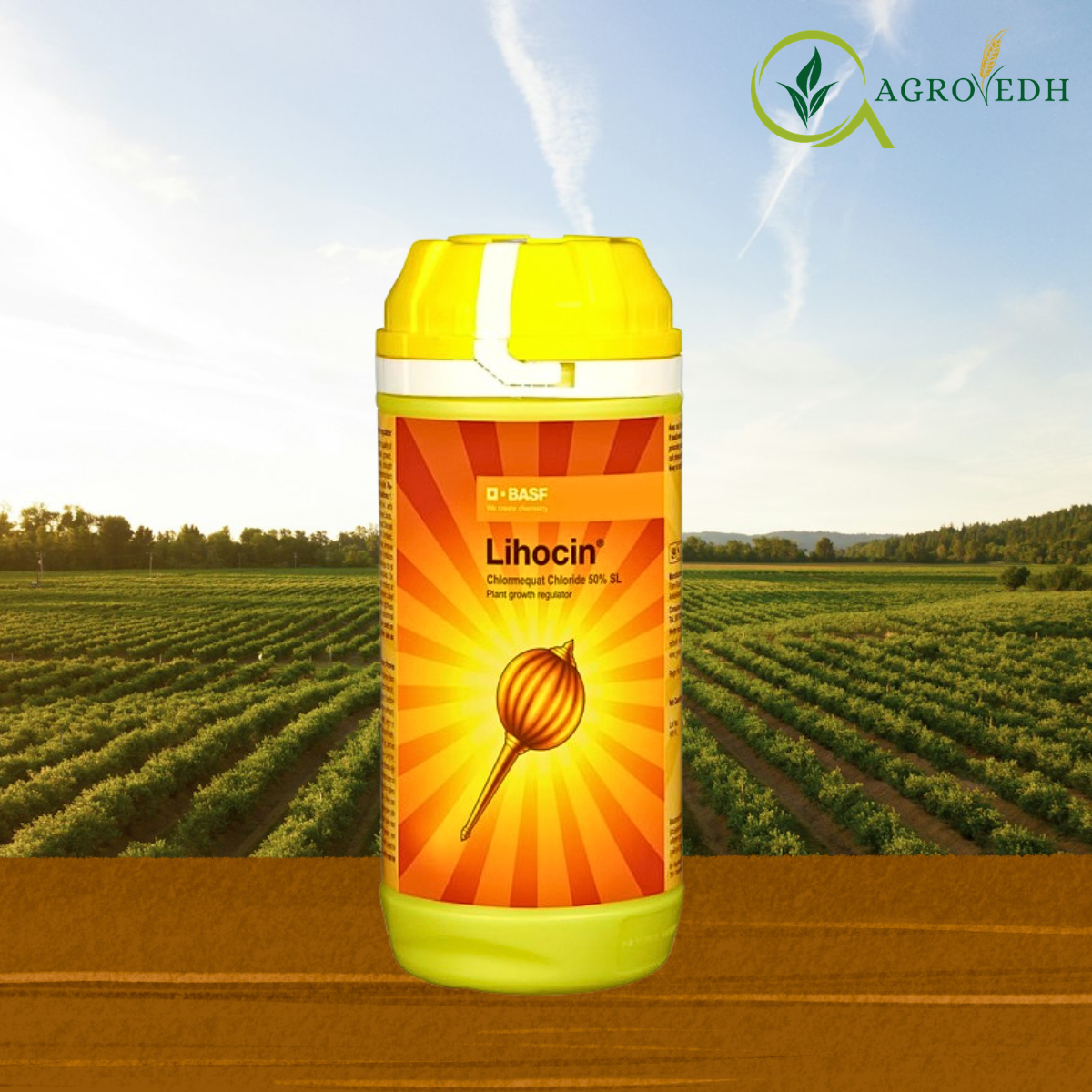
Lihocin PGR
Lihocin PGR is a scientifically formulated plant growth regulator containing 50% Chlormequat Chloride SL, designed to optimize plant architecture, reduce excessive vegetative growth, and improve crop productivity. It is widely used in crops like cotton, wheat, and grapes to control plant height, strengthen stems, and enhance yield potential.
By regulating gibberellic acid synthesis within the plant system, Lihocin helps reduce lodging, improve nutrient utilization, and promote better flowering and fruit setting. It is an essential tool for modern farmers aiming for balanced crop growth and higher marketable yield.
Lihocin PGR Product Overview
| Feature | Details |
|---|---|
| Product Name | Lihocin PGR |
| Category | Plant Growth Regulator (PGR) |
| Technical Content | Chlormequat Chloride 50% SL |
| Formulation Type | Soluble Liquid (SL) |
| Mode of Action | Growth Retardant – Inhibits Gibberellic Acid Biosynthesis |
| Chemical Toxicity | As per approved label classification |
| Application Method | Foliar Spray |
Lihocin PGR Features and Benefits
Growth Regulation:
Controls excessive vegetative growth by reducing internodal elongation, resulting in compact and sturdy plants.
Reduces Lodging:
Strengthens stems, particularly in wheat and other cereals, preventing crop lodging due to wind or heavy rainfall.
Improves Flowering & Boll Retention (Cotton):
Balances vegetative and reproductive growth, leading to better boll formation and reduced flower drop.
Enhances Nutrient Efficiency:
Redirects plant energy from excessive leaf growth toward reproductive development and yield formation.
Uniform Crop Maturity:
Promotes synchronized flowering and fruiting, enabling uniform harvesting.
Better Light Penetration:
Compact canopy allows improved sunlight penetration and air circulation, reducing microclimate-related disease risks.
Proven PGR Technology:
Chlormequat Chloride has decades of agronomic research backing its effectiveness in cereal and fiber crops.
Mode of Action
Chlormequat Chloride inhibits the biosynthesis of gibberellic acid (GA), a hormone responsible for cell elongation. By restricting GA production, Lihocin reduces excessive stem elongation and promotes thicker, stronger stems. This hormonal regulation results in improved plant stand, reduced lodging, and better yield stability.
Usage and Crop Recommendations
| Crop | Purpose | Dosage per Acre | Dilution in Water | Waiting Period |
|---|---|---|---|---|
| Cotton | Height control, boll retention | 200–250 ml | 200 L | As per label |
| Wheat | Lodging control | 300–400 ml | 200 L | As per label |
| Grapes | Vegetative growth control | 150–200 ml | 200 L | As per label |
Rain Fastness: Approximately 4–6 hours after spray.
Method of Application: Foliar spray at recommended crop stage. Apply during active vegetative growth phase for best results.
Research-Based Advantages
Field studies in cereal crops have shown that Chlormequat Chloride application reduces lodging incidence significantly while maintaining or improving grain yield. In cotton, regulated vegetative growth improves boll retention percentage and enhances picking efficiency. Balanced plant architecture results in better crop management and optimized input utilization.
Safety and Handling
Always wear protective gloves, mask, and protective clothing during spraying. Avoid spray drift and do not apply during strong winds. Follow all label instructions carefully.
Disclaimer: Always read the physical product label provided by the manufacturer before use. Follow safety precautions and recommended dosage strictly. Agrovedh is not responsible for any damage resulting from improper application.
Reviews
There are no reviews yet.